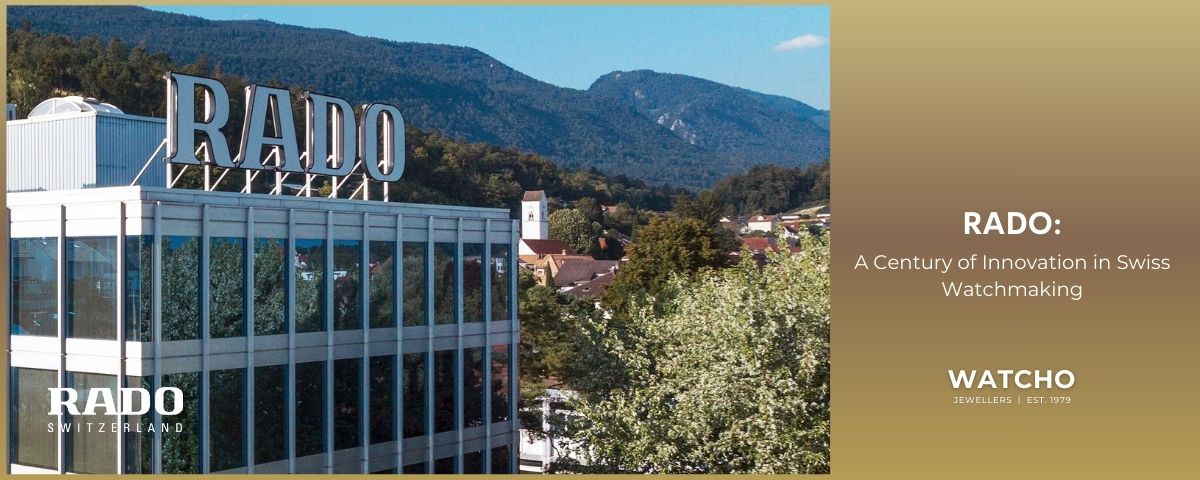
Rado has been an influential name in Swiss watchmaking since 1917, combining technical expertise with a bold, unconventional approach to design. From its beginnings as a movement manufacturer to its status today as a global, design-led brand, Rado’s story is one of continuous innovation, material mastery, and forward thinking.
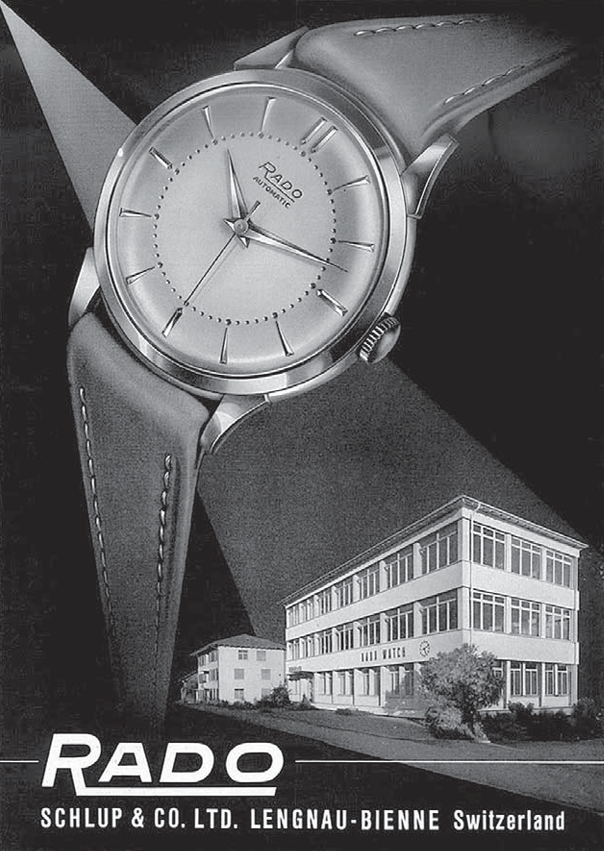
The story of Rado begins in Lengnau, Switzerland, where the Schlup brothers founded a company called Schlup & Co. in 1917. Situated between the watchmaking centres of Biel/Bienne and Grenchen, the company initially specialised in producing high-quality hand-wound movements. Many of these movements were exported internationally — particularly to the United States — even in the company’s early years.
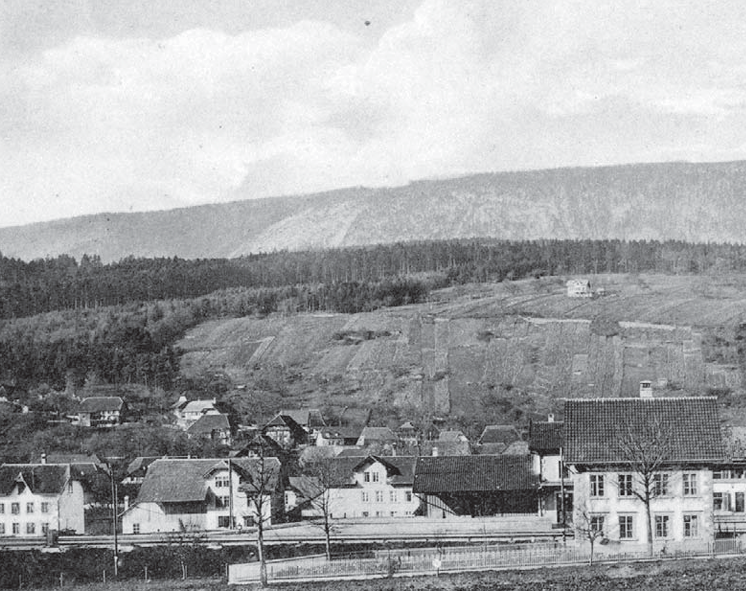
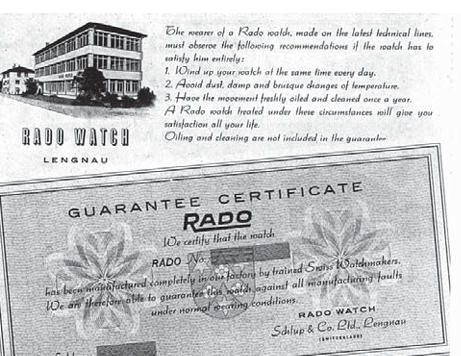
By the 1930s, Schlup & Co. had expanded its overseas commercial network and significantly strengthened its manufacturing capabilities. In 1937, the business was incorporated as a limited company, and shortly afterwards a New York branch was opened, underlining the company’s growing global ambition.
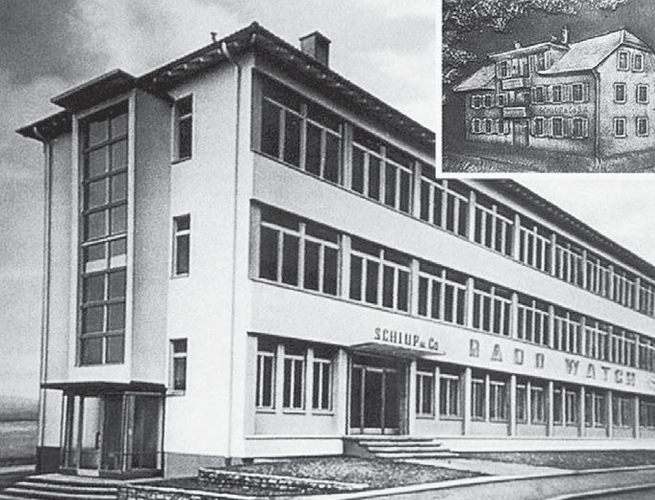
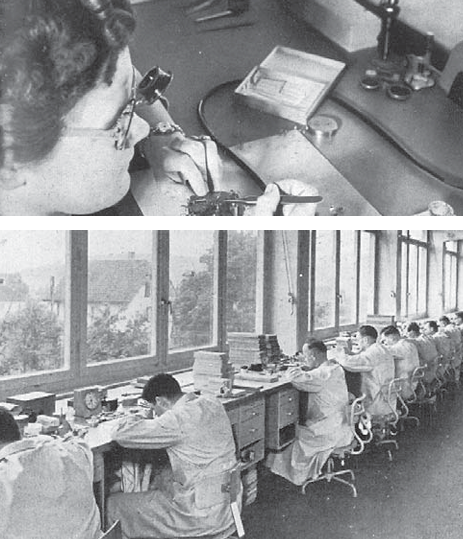
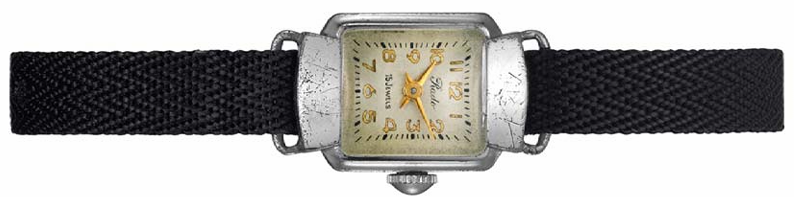
Following the Second World War, the global watch industry began shifting towards automatic movements and complete watch production. In response, Schlup & Co. made a decisive strategic move in the 1950s, transitioning from movement manufacturing to producing complete watches under its own brand identity.
The name “Rado” was chosen for its international resonance. Believed to originate from Esperanto, the word translates to “wheel” — a fundamental component of mechanical watchmaking and a symbolic link to the company’s technical roots.
In 1957, Rado was officially launched as a standalone watch brand, debuting with the Rado Golden Horse, a model that would become an early symbol of the brand’s reliability and forward-looking spirit. The launch was accompanied by a bold philosophy that still defines Rado today:
,aspect=fill;Crop=(0,0,775,565),gravity=Center)
“If we can imagine it, we can make it. And if we can make it, we will.”
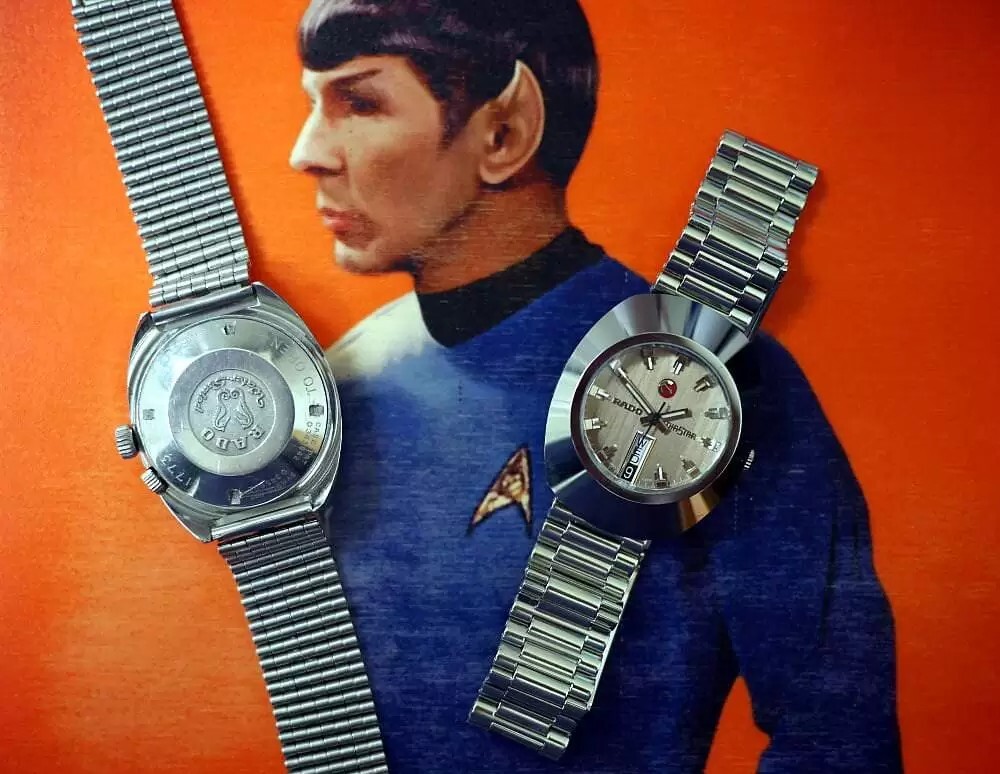
A defining milestone in Rado’s history came in 1962 with the introduction of the Rado DiaStar 1. More than just a new model, the DiaStar represented a radical departure from conventional watch design. Its distinctive case shape and exceptional scratch resistance laid the groundwork for Rado’s long-standing reputation as a pioneer of durable, design-driven timepieces.
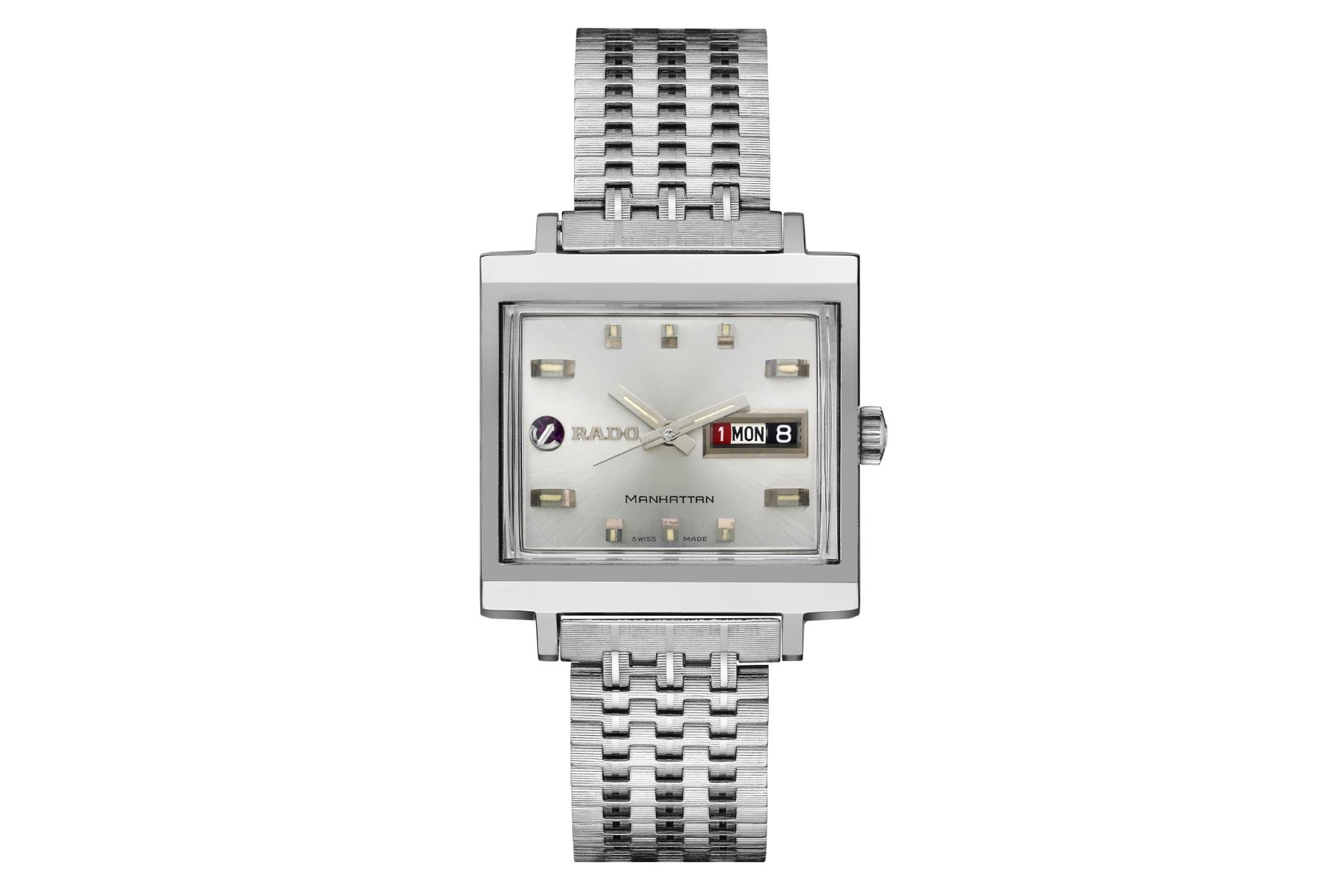
Throughout the following decades, Rado continued to release models that challenged aesthetic norms, including the Rado Manhattan in 1966 and the Dia 67 Glissière in 1976 — both of which reinforced the brand’s willingness to experiment with form and ergonomics.
Material innovation has been central to Rado’s identity. From the 1980s onward, the brand began redefining modern watchmaking through the use of advanced materials.
Key breakthroughs included the ergonomic Rado Anatom (1981), the Rado Integral (1986) with its pioneering use of high-tech ceramic, the minimalist Rado Ceramica (1990 & 1998), the futuristic Rado Sintra (1993), and the ultra-hard, diamond-coated Rado V10K (2002).
These innovations firmly established Rado as the “Master of Materials,” setting the brand apart in an industry traditionally dominated by steel and precious metals.
In the 21st century, Rado continued to merge cutting-edge materials with contemporary design. Notable releases included the Rado r5.5 (2009), designed in collaboration with Jasper Morrison,
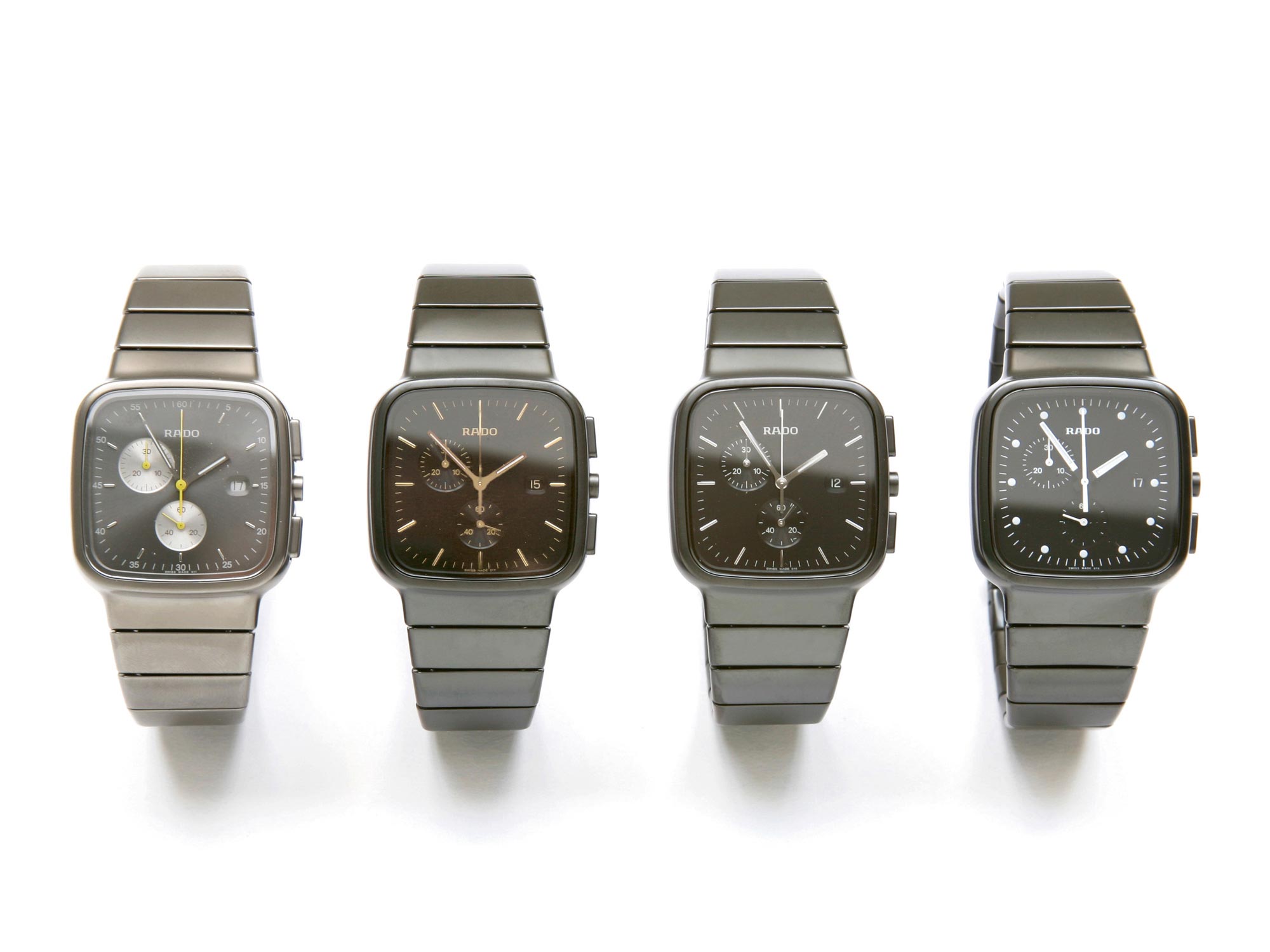
and the Rado True Thinline (2011), one of the world’s thinnest ceramic watches at the time.
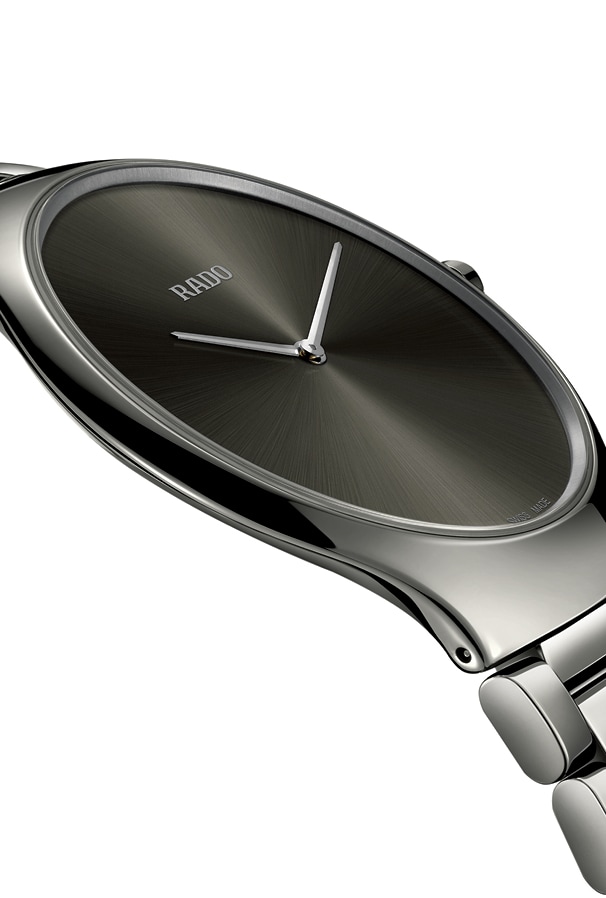
The introduction of collections such as HyperChrome and ceramic touch models further demonstrated Rado’s ability to innovate not only in materials but also in user interaction and modern aesthetics.
During the restructuring of the Swiss watch industry, Rado became part of the Swatch Group. This integration provided access to advanced manufacturing technologies, research facilities, and movement expertise, while allowing Rado to maintain its distinct creative and experimental design language.
Today, Rado continues to push the boundaries of Swiss watchmaking through its mastery of coloured high-tech ceramic and its ongoing exploration of form, texture, and durability. Drawing on over a century of expertise and a legacy defined by milestone innovations, Rado remains true to its founding philosophy — creating Swiss-made watches that are not only technically advanced, but unmistakably contemporary.







 +441908983500
 WhatsApp